Proper PPE Checklist: Are You Actually Protected Against Infectious Diseases?
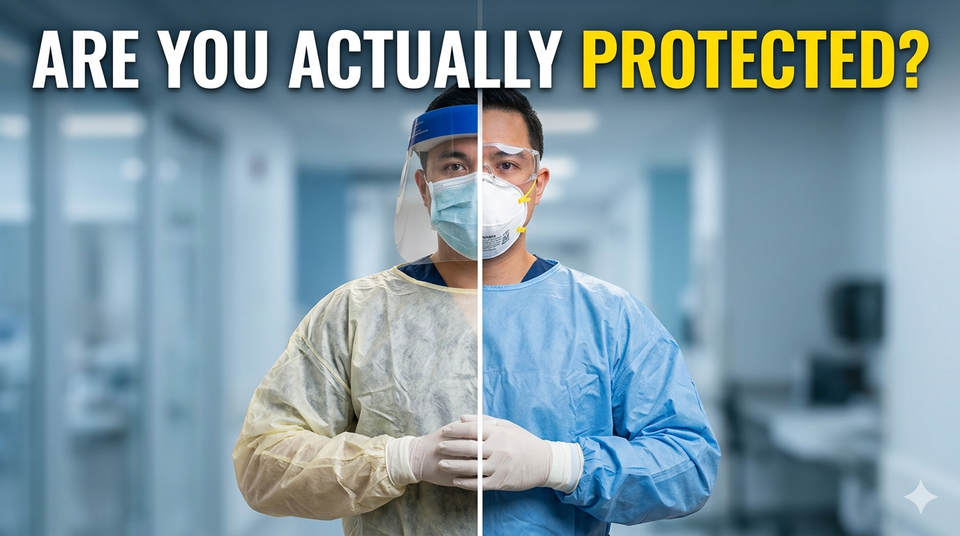
We’ve all seen the movie scene: a deadly virus breaks out, and scientists stroll into the quarantine zone wearing pressurized, bright yellow suits looking like high-tech Minions.
Back in the real world, your Personal Protective Equipment (PPE) is probably a bit more modest. But whether you are a healthcare worker, an institutional cleaner, or just trying to survive flu season in a high-exposure environment, a critical question remains: Are you actually protected, or are you just cosplaying safety?
Slapping on some gear doesn't instantly make you immune. In fact, wearing PPE incorrectly can give you a false sense of security that actually increases your risk. Let's break down the ultimate PPE checklist to ensure your armor actually keeps the bugs at bay.
The Essential PPE Checklist
1. The Mask & Respirator: The Great Barrier Reef of Your Face
A mask only works if air actually travels through the fabric, not around the sides. If you can feel your breath shooting up into your eyes or escaping past your jawline, you aren't wearing a shield—you're wearing a chin strap.
- The Fit Check: For N95 or KN95 respirators, pinch the metal nose clip firmly with both hands. Mold it to your face shape.
- The Sniff Test: If you can smell your coworker’s microwaved fish lunch from five feet away while wearing a tightly sealed respirator, check the seal again (or re-evaluate your workplace culture).
Fun Fact: The concept of masks protecting against disease isn't new, but the science took a while to catch up. During the Plague, doctors wore bird-like masks stuffed with lavender and camphor. They thought the disease spread through bad smells (miasma). Ironically, the heavy leather suits and masks did help block droplets and fleas, but for entirely the wrong reasons!
2. Gowns & Aprons: Body Armor (Minus the Cool Factor)
Fluid-resistant gowns are your frontline defense against splashes and spills.
- The Coverage Check: Your gown needs to cover your torso completely from your neck to your knees, and your arms down to your wrists.
- The Fastener Rule: Fasten it securely in the back. A flapping, half-tied gown is just a cape waiting to catch a stray pathogen.
3. Eye Protection: Because Your Eyeballs Can Breathe (Sort Of)
Regular prescription eyeglasses do not count as PPE. They leave massive gaps on the sides, top, and bottom.
- Goggles vs. Face Shields: Goggles protect against direct splashes into the eyes. Face shields protect your entire face (including your expensive mask) from sprays. Pick the one that matches your specific exposure risk.
4. Gloves: The Final Frontier
Gloves are the most abused piece of PPE on the planet. They are meant to protect you from contact, but the moment you touch a contaminated surface, your gloved hand becomes a biological weapon.
- The Fit: They should fit snugly but not stretch so tightly that they tear when you make a fist.
- The Cuff Overlap: Pull the cuffs of your gloves over the sleeves of your gown. No exposed skin left behind.
Fun Fact: Modern medical gloves exist thanks to a love story. In 1889, Caroline Hampton, a chief operating nurse at Johns Hopkins, developed severe dermatitis from handling harsh disinfectants. Her fiancé, Dr. William Halsted, asked the Goodyear Rubber Company to make thin rubber gloves to protect her hands. It worked so well that the whole surgical team adopted them.
The Secret Trap: The "Doffing" Disaster
Here is the twist ending to the safety movie: Most people contaminate themselves when taking their PPE off (doffing), not while wearing it.
When you're tired at the end of a shift, it's tempting to rip everything off like you're shedding clothes after a long day. Don't do it. Treat the outside of your used PPE like it's covered in wet, invisible paint.
How to Doff Without Sabotaging Yourself:
- The Dirtiest Bit Gloves Off First Peel them off inside-out so the dirty exterior is trapped on the inside. Wash your hands immediately after.
- Careful with the Ties Remove the Gown Unfasten the ties, then pull it away from your neck and shoulders, touching only the inside of the gown. Roll it into a bundle and discard.
- Change Environment Exit the Contact Zone Step away from the immediate exposure area before touching your face protection.
- Handle by the Straps Face Shield / Goggles Lift them from the back headpiece or ear loops. Do not touch the front of the shield.
- The Final Layer Mask / Respirator Last Untie or untangle the straps from behind your head and pull it forward away from your face. Again, do not touch the front filter mesh.
The Golden Rule: When in doubt, perform hand hygiene. Wash your hands before putting PPE on, between removing layers, and immediately after everything is thrown away. Sanitizer is your best friend.
Stay safe out there, seal those masks, and remember: protection is only as good as your technique!
Member discussion